The Growing Need for Mental Health Crisis Response Teams
With mental health-related 911 calls making up almost 10% of EMS call volume in some areas1, it’s clear that EMS agencies need to be equipped with more than just traditional emergency medical skills. These calls often involve individuals experiencing severe anxiety, depression, or other psychiatric emergencies, requiring a specialized approach.
To address this, many EMS agencies are forming dedicated mental health crisis response teams that include EMTs and paramedics trained in mental health care. These teams often collaborate with social workers and mental health professionals to provide a holistic response to crises. Ninth Brain’s customizable learning management system (LMS) allows EMS organizations to implement ongoing mental health training programs, ensuring that their teams stay current on best practices and new protocols for psychiatric emergencies.
Success Stories and Best Practices: What’s Working?
Programs like Crisis Assistance Helping Out On The Streets (CAHOOTS) in Eugene, Oregon, and Denver’s Support Team Assisted Response (STAR) are paving the way for specialized EMS mental health response. These initiatives show how trained teams can significantly reduce emergency department visits and police involvement while providing better outcomes for individuals in crisis1, 2.
How Specialized Teams Benefit EMS Providers and Patients
The rise of mental health crisis response teams is transforming EMS by ensuring that individuals receive the right care at the right time. These specialized teams offer several key benefits:
- De-escalation of Crises: Trained EMS professionals can calm and stabilize situations, reducing the risk of escalation and ensuring safer outcomes for both patients and responders.
- Reduction in ED Visits: By managing crises in the field and connecting individuals with appropriate services, these teams help reduce unnecessary emergency department admissions, easing the burden on hospitals1.
- Improved Patient Care: Tailored interventions allow for more compassionate and effective care, improving long-term outcomes for individuals experiencing a psychiatric emergency.
Looking Ahead: The Future of EMS in Mental Health Care
The future of EMS is increasingly intertwined with mental health care. As more EMS agencies adopt specialized mental health crisis response teams, they will need tools to manage the complexity of these new roles. Ninth Brain can help EMS providers meet these challenges head-on with tools for credential tracking, compliance management, and comprehensive training solutions.
By partnering with Ninth Brain, EMS agencies can ensure that their teams are not only well-prepared for traditional emergencies but also equipped to handle the growing demand for mental health crisis response. With our platform, EMS agencies can focus on what matters most: delivering the best possible care to those in need.
FAQs
What is Ninth Brain, and how can it help EMS agencies?
Ninth Brain provides a cloud-based platform designed to manage compliance, credential tracking, training, and operational needs for EMS providers. With features like customizable learning management systems, incident reporting, and credential management, Ninth Brain helps EMS agencies ensure their staff is properly trained, credentialed, and ready to respond to both traditional medical emergencies and specialized situations like mental health crises. Our tools streamline operations, improve efficiency, and support regulatory compliance.
How can Ninth Brain support the implementation of mental health crisis response teams?
Ninth Brain’s platform offers customizable training modules that EMS agencies can use to train their staff on mental health crisis intervention techniques. The system also tracks certifications and credentials to ensure that all team members are properly trained and compliant. Additionally, Ninth Brain’s incident reporting and data analysis tools help agencies monitor the effectiveness of their mental health response teams and make informed decisions about improvements.
What kind of training can be managed through Ninth Brain’s platform?
Ninth Brain’s learning management system (LMS) allows EMS agencies to create, distribute, and track a wide variety of training programs. These can include mandatory certifications, ongoing education, mental health crisis intervention, and other specialized training. Our platform supports both in-person and online training formats, making it easy for agencies to provide continuous education and keep their teams ready for any situation.
How can Ninth Brain’s incident reporting tools help improve patient outcomes?
Ninth Brain’s incident reporting tools allow EMS agencies to track and analyze patient care incidents, including those involving mental health crises. By collecting data on how situations are handled, agencies can identify areas for improvement and ensure that their response protocols are as effective as possible. This data-driven approach helps EMS agencies continuously refine their operations to improve patient outcomes.
How does Ninth Brain help EMS agencies manage their workforce during crises?
Ninth Brain’s scheduling and workforce management tools allow EMS agencies to efficiently manage their staff, even during high-demand situations like mental health crises. With real-time data and easy-to-use scheduling features, agencies can ensure that the right personnel are available when needed. Additionally, Ninth Brain’s platform provides insights into staffing needs and helps prevent burnout by balancing workloads across the team.
How can I get started with Ninth Brain for my EMS agency?
Getting started with Ninth Brain is simple. You can request a demo through our website to see how our platform works and explore the various features that can benefit your agency. Once you decide to move forward, our team will work with you to customize the system to meet your specific needs and ensure a smooth implementation process.
References
1 – https://www.policeforum.org/assets/MBHResponse.pdf
2 – https://www.ems1.com/what-paramedics-want/inside-ems-challenges-and-opportunities-for-ems-in-2024
In recent years, the realm of Emergency Medical Services (EMS) has embraced the burgeoning concept of Mobile Integrated Healthcare-Community Paramedicine (MIH-CP). This model aims to enhance community health through a range of services beyond traditional emergency care, encompassing preventive, post-acute care, and chronic disease management. As EMS providers evolve to meet community needs through MIH-CP, having the right technological tools is indispensable for success.
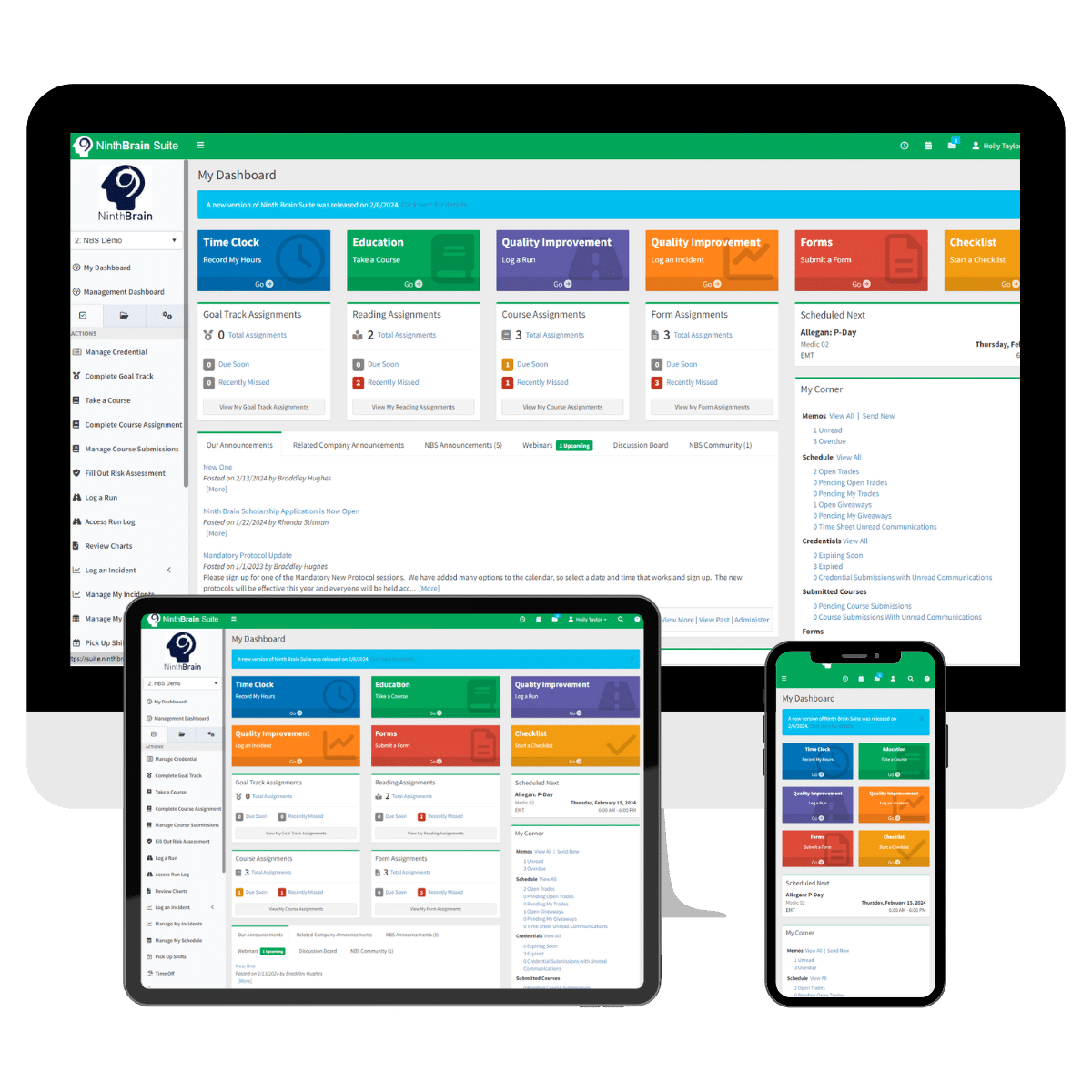
Enter NinthBrain—a comprehensive suite of solutions tailor-made for the EMS sector. Our robust platform encompasses a plethora of features including Learning Management, Workforce Scheduling, Quality Improvement Tracking, and more, all designed to streamline operations, ensure compliance, and foster a culture of continuous learning and improvement. When wielded aptly, these tools can significantly bolster MIH-CP initiatives, paving the path towards a more proactive, community-centric healthcare model.
Let’s delve deeper to understand how NinthBrain’s suite of solutions dovetail with MIH-CP goals:
Learning Management System (LMS):
Education Tailored to Community Needs: Our LMS enables EMS organizations to create, manage, and distribute educational content that addresses the specific health needs of the communities they serve. This is a cornerstone in ensuring that paramedics are well-equipped with the requisite knowledge and skills to provide community-focused care.
Quality Improvement Tracker:
Data-Driven Decision Making: By tracking performance data and incident investigations, EMS providers can glean invaluable insights into areas of improvement, thereby aligning their services more closely with MIH-CP objectives.
Credential Management:
Ensuring Competency and Compliance: Our Credential Management feature ensures that all personnel are up to date with their certifications and training, a critical aspect in delivering competent and compliant community healthcare services.
Workforce Scheduling:
Optimized Resource Allocation: Efficient scheduling is pivotal in ensuring that the right resources are available at the right time to meet community healthcare needs. Our Workforce Scheduling feature allows for the creation and auto-generation of schedules, ensuring seamless operations in tune with MIH-CP goals.
Through these and many other features, NinthBrain is committed to supporting EMS organizations as they navigate the terrain of MIH-CP, aiding in the transition towards a more integrated and community-focused model of care. As the healthcare sector continues to evolve, we are here to ensure that EMS providers have the tools they need to lead the charge in delivering superior community healthcare.
At NinthBrain, we are excited about the boundless possibilities that lie ahead in bridging modern healthcare initiatives like MIH-CP with innovative technology solutions. Together, we are not just responding to emergencies; we are nurturing healthier communities, one innovative solution at a time.
Emergency response and preparedness require accounting for critical events as they are occurring. This real-time work requires allocating personnel and resources that keep people safe. The right platform for creating policies, enforcing guidelines, and making improvements are essential to providing the best care possible.
Modern emergency response teams need to be prepared to go into action at any time. However, providing vital care to victims can be impeded by the wrong tools. Knowing the challenges that emergency response teams will likely face — beforehand — allows them to be prepared for anything so that they can focus on saving lives.
The Challenges of Emergency Response
There are many challenges that emergency responders must face when operating in the field. These can range from a lack of personnel to inadequate resources.
When problems occur, emergency response teams need to be able to communicate effectively with one another and deliver important information in real time. However, even the best intentions can be derailed by a lack of proper awareness, training, or funding.
Communication during emergencies is essential. Without the right tools, responders won’t be able to coordinate their efforts, track important events, or call in vital resources and support when needed most. The challenges of emergency response can be addressed by incorporating the right solutions into everyday workflows.
Communication Tools Every Emergency Response Team Needs
In an emergency, response teams require specialized tools and procedures readily available at a moment’s notice. By coordinating efforts and building an intelligence-driven action plan, emergency responders can maintain situational awareness, allowing them to make better decisions.
EMS communication tools can be lifesaving technology when combined with real-world response teams. Providing a centralized database for resources, contact information, and EMS services is essential for communicating during an emergency.
Here are some tools for emergency response teams that want to improve their communication:
Landline and Mobile Phones
Phone services are an essential communication tool that emergency response teams should always have access to. Voice messages and real-time calling offer the most direct means of communicating over wide distances and ensuring information is relayed correctly.
Landlines are one of the most reliable services to have during emergencies. However, there may be some instances in which using landline calling becomes impossible.
Satellite phones can be deployed in remote areas or when local services have gone down. Cell phones provide texting and wireless alerts to anybody with a network signal, making them an essential piece of communication equipment for any emergency response team.
Two-Way Radio
There are some situations in which using a landline or cell phone becomes impossible. In the case of power outages, natural disasters, or other incidents affecting infrastructure, a reliable way to communicate over short distances is essential.
Hunters, hikers, and emergency responders often use two-way radios to maintain a lifeline to another device.
Two-way radios have been used for nearly a century to provide two-way communication across the radio spectrum. Emergency response teams can use two-way radios to communicate important information over a specific frequency, making them a flexible option during emergencies.
The only drawback is that the use of two-way radios can be hampered by local regulations, geography, and weather.
CB Radio
CB radio is another form of radio communication that can be used by emergency response teams. Modern CB radios provide a flexible alternative to other options with their low cost and ease of use. In contrast to two-way radios, CB radios operate over very short distances.
Unfortunately, CB radios have a limited power output and operate in a limited range. However, CB radios can be used anywhere to communicate within a limited area for free. This feature makes them a good way of distributing weather, traffic, and emergency conditions when other methods fail.
Networking and Internet
In addition to phones and radio broadcasts, emergency response teams can use networking to communicate with one another. This approach has the advantage of giving users access to a wide range of software applications for communicating through social media channels, email, and public websites.
Networking and the internet are essential for modern emergency response teams that want to reach the most people possible. By distributing important messages and offering the public help and support over the internet, emergency response teams can communicate effectively and provide aid to those who need it.
Emergency Responders Can Save Lives with the Right Tools
For emergency response teams, communication is an essential asset that allows the coordination of actions, the distribution of information, and the maintenance of a lifeline when things become too difficult. You can seriously limit these features by using only a single tool or channel.
Combined, communication tools such as cellular and landline phones, radios, and the internet offer a powerful solution that can make or break a rescue operation.
Having access to support and resources across channels and devices can turn around even in the worst situation. This reality means that, for emergency response teams, the best communication tools are not only important but essential.
Wondering if Ninth Brain is the right fit? Let’s Connect and Explore!