The Growing Need for Mental Health Crisis Response Teams
With mental health-related 911 calls making up almost 10% of EMS call volume in some areas1, it’s clear that EMS agencies need to be equipped with more than just traditional emergency medical skills. These calls often involve individuals experiencing severe anxiety, depression, or other psychiatric emergencies, requiring a specialized approach.
To address this, many EMS agencies are forming dedicated mental health crisis response teams that include EMTs and paramedics trained in mental health care. These teams often collaborate with social workers and mental health professionals to provide a holistic response to crises. Ninth Brain’s customizable learning management system (LMS) allows EMS organizations to implement ongoing mental health training programs, ensuring that their teams stay current on best practices and new protocols for psychiatric emergencies.
Success Stories and Best Practices: What’s Working?
Programs like Crisis Assistance Helping Out On The Streets (CAHOOTS) in Eugene, Oregon, and Denver’s Support Team Assisted Response (STAR) are paving the way for specialized EMS mental health response. These initiatives show how trained teams can significantly reduce emergency department visits and police involvement while providing better outcomes for individuals in crisis1, 2.
How Specialized Teams Benefit EMS Providers and Patients
The rise of mental health crisis response teams is transforming EMS by ensuring that individuals receive the right care at the right time. These specialized teams offer several key benefits:
- De-escalation of Crises: Trained EMS professionals can calm and stabilize situations, reducing the risk of escalation and ensuring safer outcomes for both patients and responders.
- Reduction in ED Visits: By managing crises in the field and connecting individuals with appropriate services, these teams help reduce unnecessary emergency department admissions, easing the burden on hospitals1.
- Improved Patient Care: Tailored interventions allow for more compassionate and effective care, improving long-term outcomes for individuals experiencing a psychiatric emergency.
Looking Ahead: The Future of EMS in Mental Health Care
The future of EMS is increasingly intertwined with mental health care. As more EMS agencies adopt specialized mental health crisis response teams, they will need tools to manage the complexity of these new roles. Ninth Brain can help EMS providers meet these challenges head-on with tools for credential tracking, compliance management, and comprehensive training solutions.
By partnering with Ninth Brain, EMS agencies can ensure that their teams are not only well-prepared for traditional emergencies but also equipped to handle the growing demand for mental health crisis response. With our platform, EMS agencies can focus on what matters most: delivering the best possible care to those in need.
FAQs
What is Ninth Brain, and how can it help EMS agencies?
Ninth Brain provides a cloud-based platform designed to manage compliance, credential tracking, training, and operational needs for EMS providers. With features like customizable learning management systems, incident reporting, and credential management, Ninth Brain helps EMS agencies ensure their staff is properly trained, credentialed, and ready to respond to both traditional medical emergencies and specialized situations like mental health crises. Our tools streamline operations, improve efficiency, and support regulatory compliance.
How can Ninth Brain support the implementation of mental health crisis response teams?
Ninth Brain’s platform offers customizable training modules that EMS agencies can use to train their staff on mental health crisis intervention techniques. The system also tracks certifications and credentials to ensure that all team members are properly trained and compliant. Additionally, Ninth Brain’s incident reporting and data analysis tools help agencies monitor the effectiveness of their mental health response teams and make informed decisions about improvements.
What kind of training can be managed through Ninth Brain’s platform?
Ninth Brain’s learning management system (LMS) allows EMS agencies to create, distribute, and track a wide variety of training programs. These can include mandatory certifications, ongoing education, mental health crisis intervention, and other specialized training. Our platform supports both in-person and online training formats, making it easy for agencies to provide continuous education and keep their teams ready for any situation.
How can Ninth Brain’s incident reporting tools help improve patient outcomes?
Ninth Brain’s incident reporting tools allow EMS agencies to track and analyze patient care incidents, including those involving mental health crises. By collecting data on how situations are handled, agencies can identify areas for improvement and ensure that their response protocols are as effective as possible. This data-driven approach helps EMS agencies continuously refine their operations to improve patient outcomes.
How does Ninth Brain help EMS agencies manage their workforce during crises?
Ninth Brain’s scheduling and workforce management tools allow EMS agencies to efficiently manage their staff, even during high-demand situations like mental health crises. With real-time data and easy-to-use scheduling features, agencies can ensure that the right personnel are available when needed. Additionally, Ninth Brain’s platform provides insights into staffing needs and helps prevent burnout by balancing workloads across the team.
How can I get started with Ninth Brain for my EMS agency?
Getting started with Ninth Brain is simple. You can request a demo through our website to see how our platform works and explore the various features that can benefit your agency. Once you decide to move forward, our team will work with you to customize the system to meet your specific needs and ensure a smooth implementation process.
References
1 – https://www.policeforum.org/assets/MBHResponse.pdf
2 – https://www.ems1.com/what-paramedics-want/inside-ems-challenges-and-opportunities-for-ems-in-2024
In the high-stakes world of Emergency Medical Services (EMS), the scheduling of shifts is more than just a logistical necessity—it’s a critical component that affects provider well-being, patient safety, and overall organizational efficiency. With various shift patterns, from grueling 24-hour shifts to more manageable 12-hour rotations, EMS agencies and providers constantly seek the ideal balance that promotes optimal care delivery and employee satisfaction. This article delves into the intricacies of EMS shift patterns, exploring the preferences of providers and organizations while highlighting the pivotal role of advanced scheduling solutions like Ninth Brain’s robust Schedule Builder.
Understanding EMS Shift Patterns
EMS shift patterns have evolved significantly, reflecting changes in medical practices, technological advancements, and a deeper understanding of human physiology. Commonly observed patterns include:
- 24-Hour Shifts: Traditionally favored for efficiency and predictability.
- 12-Hour Shifts: Offering a balance between work demands and personal time, 12-hour shifts are increasingly popular among providers seeking a more balanced lifestyle.
- Rotating Shifts: A mix of day and night shifts aims to distribute the workload evenly but is often criticized for disrupting natural sleep cycles.
Each pattern has its merits and drawbacks, influencing the immediate work environment and the broader aspects of provider health and organizational goals.
The Impact of Shift Patterns on EMS Providers
Shift patterns exert a profound influence on EMS providers, affecting aspects such as:
- Worker Morale: Extended or irregular shifts can lead to burnout, stress, and decreased job satisfaction, whereas predictable, shorter shifts tend to boost morale and engagement.
- Worker Retention: Favorable shift patterns are a significant factor in retaining skilled providers, with many preferring schedules that accommodate work-life balance.
The Influence of Shift Patterns on Patient Safety
The correlation between shift patterns and patient safety cannot be overstated. Exhaustion from long or irregular shifts can impair decision-making and physical coordination, directly impacting the quality of patient care. Conversely, well-rested providers are more alert, responsive, and capable of delivering high-quality medical services.
Organizational Preferences for Shift Patterns
EMS agencies opt for specific shift patterns based on several factors:
- Efficiency and Coverage: Ensuring service demand is met without overburdening resources.
- Agency Goals and Productivity: Aligning work schedules with organizational objectives, including cost management and service quality.
Provider Preferences for Shift Patterns
Providers often have personal preferences for their shifts, influenced by family commitments, personal health, and lifestyle choices. Many desire schedules that offer a predictable routine, allowing them to plan their lives outside of work.
The Role of Scheduling Software in Managing Shift Patterns
Advanced scheduling solutions, like Ninth Brain’s robust Schedule Builder, play a crucial role in addressing the complex needs of EMS scheduling. These tools offer:
- Flexibility: Allowing for accommodating provider preferences within the constraints of organizational needs.
- Efficiency: Streamlining the scheduling process, reducing administrative burden, and ensuring optimal workforce utilization.
By leveraging technology, EMS agencies can balance operational demands and provider well-being harmoniously.
Challenges and Solutions in Shift Scheduling
Despite the best efforts, challenges persist in shift scheduling, including resistance to change, budget constraints, and the complexities of matching provider availability with service demands. Solutions lie in open communication, flexible policymaking, and the strategic use of scheduling technologies that offer adaptability and scalability.
Conclusion
Finding the best shift pattern for EMS agencies and providers is a multifaceted challenge that requires carefully balancing individual preferences, patient care standards, and organizational goals. With the support of innovative scheduling solutions like Ninth Brain’s Schedule Builder, EMS agencies can navigate these complexities, enhancing both provider well-being and service delivery excellence. As the EMS landscape evolves, so will the strategies for optimal shift management, always with the twin goals of exceptional patient care and provider satisfaction in mind.
References:
https://www.ncbi.nlm.nih.gov/pmc/articles/PMC9060748/
https://www.ncbi.nlm.nih.gov/pmc/articles/PMC1854972/
FAQs
How do shift patterns affect EMS provider health and morale?
Shift patterns significantly influence EMS provider health and morale. Optimal shift patterns can offer improved job satisfaction, a better work-life balance, and reduced stress levels, enhancing overall well-being. Conversely, prolonged or irregular shifts can contribute to fatigue, burnout, and mental health issues, negatively impacting morale and physical health.
Why do EMS agencies prefer specific shift patterns?
EMS agencies prefer specific shift patterns based on several criteria, including operational efficiency, coverage needs, provider well-being, and budget constraints. The goal is to ensure continuous, high-quality patient care while managing resources effectively and supporting the health and satisfaction of their workforce.
How can EMS providers voice their preferences for shift patterns?
EMS providers can voice their preferences through open communication channels with management, participation in scheduling committees, and feedback mechanisms like surveys. Engaging in constructive dialogue about shift preferences and concerns can lead to more collaborative scheduling solutions that consider provider needs and organizational goals.
Can shift patterns impact patient safety in EMS?
Shift patterns can directly impact patient safety. Well-designed shift schedules that prevent provider fatigue and ensure adequate rest can enhance alertness and decision-making, leading to safer and more effective patient care. Conversely, overly long or irregular shifts can increase the risk of errors and accidents, compromising patient safety.
How does Ninth Brain help in scheduling EMS shifts?
Ninth Brain’s Schedule Builder offers a comprehensive solution for EMS shift scheduling challenges. It enables agencies to create flexible, efficient schedules that accommodate provider preferences, meet operational demands, and ensure optimal coverage. With features like easy shift swaps, real-time updates, and compliance tracking, Ninth Brain simplifies the scheduling process, making it easier to balance provider well-being and organizational needs.
What are some common shift patterns in EMS today?
Common shift patterns in EMS include 24-hour shifts, which allow for extended coverage with fewer handoffs; 12-hour shifts, which offer a balance between work demands and rest; and rotating shifts, which include day and night work. Agencies may also employ variations of these patterns or hybrid schedules to meet their specific needs and goals best.
Burnout is one of the most pressing concerns facing EMS teams today. The daily stress of these intensely demanding jobs can build and build to the point where responders are at significantly greater risk of exhaustion and other adverse effects.
Burnout isn’t only a matter of decreased productivity. When an EMT isn’t at their best, it leaves them more likely to become injured during their shifts. An EMS management system provides multiple benefits that can reduce the risk of and extent of burnout in your EMS team.
Automated Scheduling
Burnout can often arise because a responder is simply working too much. If suboptimal scheduling leads to excessive stretches for individual responders, they are likely to become severely tired and less able to cope with the already exhausting nature of their job.
Lack of rest is one of the primary factors contributing to burnout among EMS teams, so careful scheduling ensures that responders do not experience undue stress. Manual scheduling can cause problems in this area. If you’re manually scheduling your team, you may schedule responders who have become overworked.
Automated scheduling with an EMS management system provides reliable scheduling that is less likely to cause burnout. It will eliminate human error so responders aren’t scheduled for longer blocks than they should be.
Even if manual scheduling can come very close, the risks presented by burnout are very severe, and your EMS team cannot afford them. Burnout can lead to injury for your responders and others, as they cannot function at their normal capacity.
Streamlining Administrative Tasks
The nature of EMS work is such that responders are often in very high-stress, high-risk situations. Their jobs consist of responding to emergencies that present substantial risks to themselves and can carry serious psychological ramifications.
This, of course, contributes to burnout. However, a significant portion of what causes burnout is, in fact, mundane and repetitive tasks. As grueling as an emergency response can be, administrative inefficiency can chip away at responders and bring on burnout just as fast.
An EMS management system provides automation for many reports and checklists. It also ensures that the appropriate staff sees reports and issues to address them. Having a more efficient and effective workplace can help prevent burnout by eliminating one aspect of the constant grind that responders face.
Providing Ongoing Education
For any occupation, a major component of burnout is individual and psychological. It is not necessarily the nature of the work but the individual’s perception of themselves and where they fit into the organization that can lead to burnout.
If your responders feel that they are not advancing, they are more likely to suffer from burnout. On the contrary, responders who regularly engage in new training get a greater sense of purpose within the organization and are more likely to stay.
An EMS management system gives complete access to more training materials, providing responders with more opportunities for improvement and development. Being able to move towards these goals can mitigate burnout brought on by stress.
If you would like to hear more about the features offered by our EMS management systems, please contact Sales@ninthbrain.com to schedule a time to speak with us.
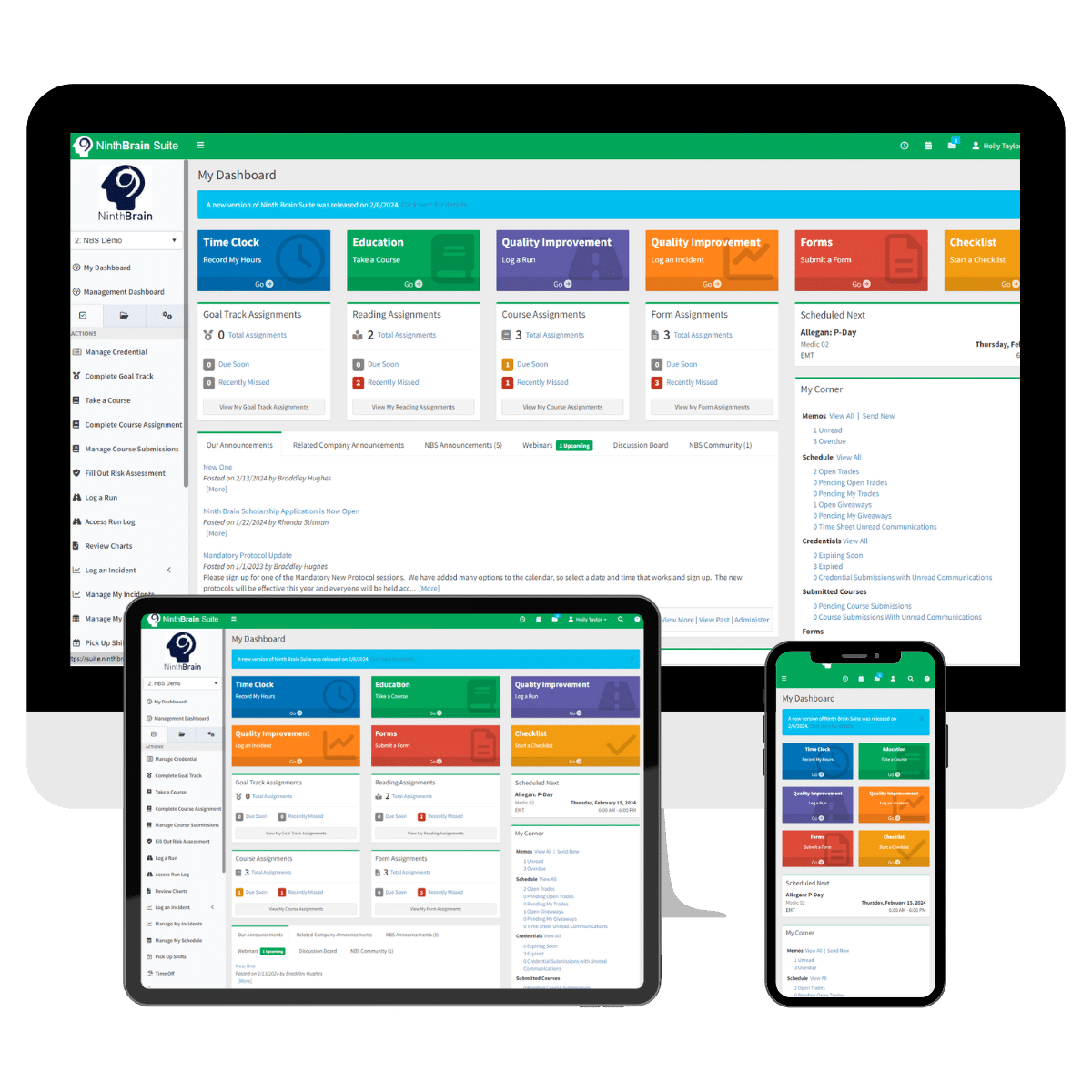
Wondering if Ninth Brain is the right fit? Let’s Connect and Explore!