In the fast-paced world of healthcare, the spotlight on EMS Organizations is brighter than ever. It’s not enough to go through the motions; you must have a team that’s genuinely qualified and ready to handle anything. This is more than just checking boxes; it’s about building a rock-solid foundation everyone can rely on. Taking inspiration from industry leaders, we’re here to show you why thorough credential verification is essential for patient care and safety.
Navigating EMS Compliance:
Keeping up with EMS compliance can feel like balancing on a tightrope. It’s all about creating strong, repeatable systems to help you stay on the straight and narrow. That’s where solutions like Ninth Brain come in, offering tools specifically designed to meet the unique challenges that EMS organizations face today. Most companies ensure that healthcare providers are qualified when hired, but this step is overlooked in some organizations. Even some of those organizations with rock-solid hiring practices fall short when it comes to assuring that practitioners maintain current, sanction-free credentials.
Ensuring that all staff have the right credentials at every stage of the process – hiring and beyond – is crucial for maintaining the highest standards of patient care and safety. Implementing a strong process or set of procedures for credential verification is essential. This process should encompass not only initial hiring practices but also ongoing monitoring to ensure that practitioners maintain current, sanction-free credentials throughout their employment. By establishing robust systems for credential verification, EMS organizations can build a foundation of trust and confidence in the qualifications of their team members, ultimately enhancing the quality of care provided to patients.
Beyond Just a Platform:
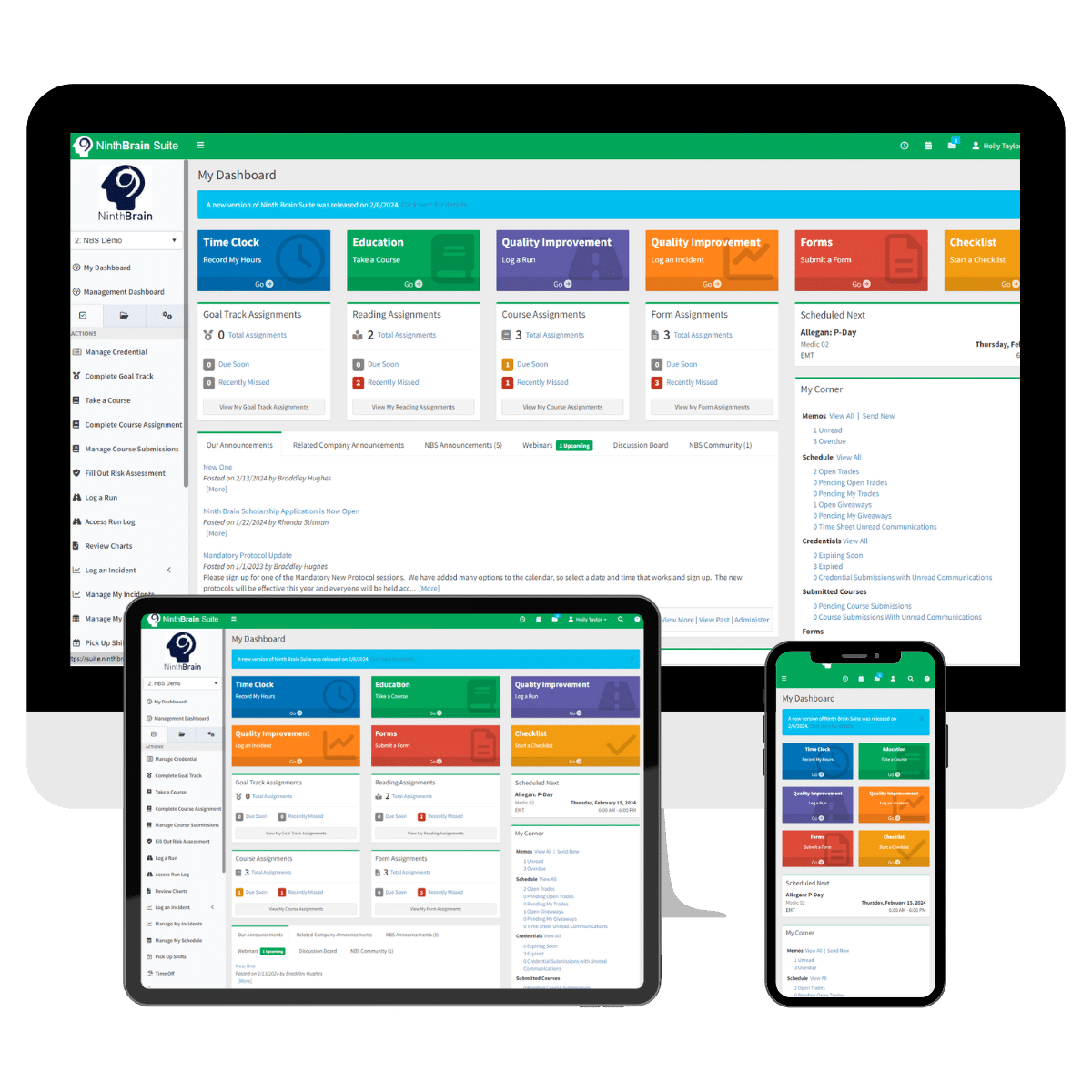
Regarding credential verification, think of solutions like Ninth Brain as your digital partner. The journey through credential checks can be daunting, but with the correct set of tools, it becomes as seamless as any other part of your day-to-day operations. Ninth Brain allows you to attach credential records to an employee’s HR file, set due dates for renewal, schedule alerts, and more. We even offer an integration with Provider Trust for worry-free exclusion and sanction monitoring. Our goal? To make maintaining high care and compliance standards as straightforward as possible.
Demystifying Credential Verification:
Sure, verifying credentials might seem daunting at first, but it’s vital for ensuring safety and compliance. However, with the right approach and tools, like those from Ninth Brain, these challenges become manageable and streamline operations. When you don’t have to spend time figuring out how to keep everything organized, you can spend your time on other important tasks. When EMS teams can focus on what they do best, everyone wins.
Proactivity as the New Standard:
Credential checks are essentially the first line of defense in maintaining patient safety and ensuring the team’s qualifications. By adopting a proactive approach, organizations can avoid potential issues before they arise, promoting a culture of continuous improvement and vigilance. This isn’t just about preventing pitfalls; it’s about setting a new standard for quality and reliability in healthcare.
The Real-World Impact:
Tangible benefits emerge for EMS organizations that prioritize rigorous credential verification. Improvements in patient safety and quality of care are not just hypothetical; they’re observed and measurable. These successes demonstrate the direct impact that a commitment to thorough credential verification can have on the overall quality of healthcare services.
The Bigger Picture:
Ensuring that teams are fully credentialed and compliant in the quest for superior healthcare is paramount. While platforms like Ninth Brain play a critical role in this process, the focus remains on the broader goal: to inform and support EMS organizations in achieving the highest standards of care and compliance. Innovation and insight make the pathway to better, safer healthcare more straightforward for everyone involved.
This approach to credential verification, emphasizing the importance of technology and human insight, aims to foster an environment where healthcare professionals can thrive, and patients can feel confident in their care.
FAQs
What is credential verification, and why is it important in healthcare?
Credential verification is the process of ensuring that healthcare professionals have the necessary qualifications, certifications, and licenses to provide care. It’s crucial for maintaining high standards of patient safety and care quality, as it confirms that healthcare providers are competent and up to date with current healthcare practices and regulations.
How does credential verification benefit EMS organizations?
It ensures that all staff are properly qualified, reducing the risk of medical errors and enhancing patient trust. Additionally, it helps EMS organizations comply with regulatory requirements, avoiding legal and financial penalties associated with non-compliance.
What tools are available to help with the credential verification process?
Solutions like Ninth Brain offer digital platforms designed to streamline the credential verification process. These tools allow organizations to attach credentials to HR files, set renewal dates, schedule alerts, and integrate with systems for exclusion and sanction monitoring, making the process more efficient and less error-prone.
What makes Ninth Brain different from other credential verification services?
Ninth Brain stands out for its comprehensive suite of features tailored specifically to EMS organizations. It not only simplifies the credential verification process but also offers integration with Provider Trust for exclusion and sanction monitoring, making it a holistic solution for maintaining compliance and ensuring high standards of care.
How often should credentials be verified?
Credentials should be verified at the time of hiring and periodically thereafter to ensure they remain current and valid. The frequency of verification can depend on the specific requirements of the healthcare organization and regulatory bodies, but it’s generally recommended to do so at least annually.
What happens if a healthcare professional’s credentials are found to be out of date or invalid?
If a professional’s credentials are out of date or invalid, they may be suspended from providing care until they can update their credentials or rectify any issues. This protects patients from potential harm and helps maintain the organization’s compliance and reputation.
Are there legal requirements for credential verification in healthcare?
Yes, there are legal requirements for credential verification in healthcare, which vary by region and type of healthcare service. These requirements are designed to ensure that healthcare professionals meet minimum standards of competence and are qualified to provide care.
How can EMS organizations stay ahead of the curve with credential verification?
By adopting advanced technologies like Ninth Brain, staying informed about changes in healthcare regulations, and fostering a culture of continuous improvement.
Audits from the Commission on Accreditation of Medical Transport Systems (CAMTS) play an essential role in ensuring the continued safety of your organization. The commission provides standards for both air and surface emergency medical transport. Audits are necessary to maintain accreditation.
While CAMTS is an independent organization and the certification is voluntary, many jurisdictions require EMS organizations to maintain those standards.
1. Thorough Exclusion Screening
Verification monitoring enables your organization to automate the process of exclusion screening. The NBS Verification Monitoring tool provides extensive checks of both federal and state exclusion lists to ensure that no exclusions go overlooked. Both OIG and state Medicaid exclusions are included.
Catching all exclusions prevents your organization from employing individuals who have been found to pose an unacceptable risk. The reasons behind exclusions differ, but they all have in common the element that the person in question has gone through an administrative sanction and been deemed unsuitable for EMS and other medical organizations.
2. Sanction Records
Administrative sanctions can lead to many different outcomes for the professionals involved. Consequences can be temporary or permanent. Individuals who are sanctioned can lose their license, face suspension, or be excluded from any federal and state healthcare programs.
Having complete access to sanctions records allows your organization to verify the history of any potential staff members. It gives you complete control over your team composition and will enable you to catch issues that didn’t lead to exclusions but might still present a significant risk to your organization and team members.
3. License Verification
License verification can be a troublesome administrative task that can take excessive amounts of time. During this time, it isn’t clear if the selected candidate will proceed, and organizations are limited in their actions. Verification monitoring provides quick and reliable access to state board-issued licenses.
Having a reliable and easy-to-use verification method for licenses is critical to your organization’s ongoing operations. Without it, you will be unable to determine if potential staff members have the credentials they claim, introducing a significant security risk.
4. Saving Time on Administrative Tasks
Every step of verification takes time and money for your organization. They are often complex tasks that involve liaising with multiple departments across multiple states. Verification monitoring automates and streamlines these tasks, letting your organization put their time to better use.
The reliability of verification monitoring services also reduces time lost to human error. Verification tasks already take excessive time, but any errors can significantly compound lost time and reduce your organization’s efficiency.
5. Liability Mitigation
Your organization needs to demonstrate that it has taken every reasonable action it can to mitigate risk in the case of any incidents. If it’s determined that your organization employs individuals who have faked their credentials or whose exclusions you have not noticed, you can face severe and immediate consequences.
Implementing verification monitoring can provide your organization with protection against fake licenses and missed exclusions. The process is comprehensive and reduces the risk of human error and fraud significantly.
To hear more about the NBS Verification Monitoring tool and how it can help your organization, contact sales@ninthbrain.com today.
Wondering if Ninth Brain is the right fit? Let’s Connect and Explore!