The Importance of End-to-End Compliance in EMS
In the fast-paced world of emergency medical services (EMS), the smallest oversight can lead to significant consequences. Imagine a vehicle breaks down in the middle of a transport, jeopardizing patient care and safety. Later, it is discovered that a required inspection hadn’t been completed. In another scenario, an EMS agency was sued after failing to document and address multiple patient care incidents; incidents that could have been avoided if patterns of issues were caught earlier.
These real-world scenarios highlight how crucial it is to have centralized systems in place — not just for tracking patient care incidents but also for ensuring vehicles are regularly inspected. By integrating these systems, EMS agencies can avoid costly oversights while improving operational efficiency, patient safety, and regulatory compliance.
The Role of Incident Tracking in EMS Compliance
Why Incident Reporting Matters
Properly reporting, tracking, and analyzing patient care incidents is not just good practice — it’s a legal and operational necessity. Without a system in place, EMS agencies risk missing critical trends in patient care that could lead to worse outcomes over time. One agency found this out the hard way when they were sued after failing to document and address multiple patient care incidents. This wasn’t just a costly legal battle; it was a failure to ensure patient safety.
Key Compliance Standards
Incident reporting isn’t just about avoiding lawsuits; it’s required by national standards. Organizations like the Commission on Accreditation of Ambulance Services (CAAS) and the Commission on Accreditation of Medical Transport Systems (CAMTS) set clear requirements for documenting and tracking incidents. For example, CAAS 201.06 and 202.05, as well as CAMTS 03.05, mandate a robust system for incident tracking.
Vehicle Inspections: A Vital Component of EMS Safety and Compliance
The Risk of Skipping Inspections
Remember that vehicle that suddenly broke down while transporting a critically ill patient? The investigation that followed revealed that a required inspection hadn’t been completed. The delay caused by this breakdown not only put the patient’s life at risk but also led to a formal state investigation into the agency’s practices. These incidents are rare, but most are avoidable if regular vehicle inspections are conducted.
Key Compliance Standards for Vehicle Safety
Vehicle safety is as critical as patient care. CAAS 203.03.02 requires that all equipment be checked regularly, and CAMTS 03.06.08 outlines the documentation requirements for vehicle inspections. These standards ensure that EMS vehicles are ready to respond and equipped to handle any emergency.
How Centralized Systems Bridge the Gap Between Incident Tracking and Vehicle Inspections
Operational Efficiency Through Integration
Having separate systems for incident tracking and vehicle inspections can be inefficient and error prone. By integrating both processes into a centralized system, EMS agencies can streamline their operations, reduce paperwork, and minimize human error. A unified platform eliminates the need to toggle between systems, saving time and improving data accuracy.
Improving Patient Safety and Reducing Risk
Both incident tracking and vehicle inspections play a key role in improving patient safety. A well-maintained vehicle and a well-documented incident history provide a solid foundation for delivering high-quality care.
The Future of EMS Compliance: Automating Processes and Improving Accountability
The Evolution of EMS Compliance Tools
Automation is transforming how EMS agencies manage compliance. As new standards emerge and expectations grow, tools like Ninth Brain will continue to play a vital role in reducing administrative workloads and improving compliance efforts. Automating both incident tracking and vehicle inspections allows EMS teams to focus on what matters most — delivering exceptional patient care.
Conclusion: Ensuring Comprehensive EMS Compliance
End-to-end compliance requires more than just checking off boxes — it requires a unified, proactive approach. With a centralized system for incident reporting and vehicle inspections, EMS agencies can avoid costly oversights, improve operational efficiency, and ensure patient safety.
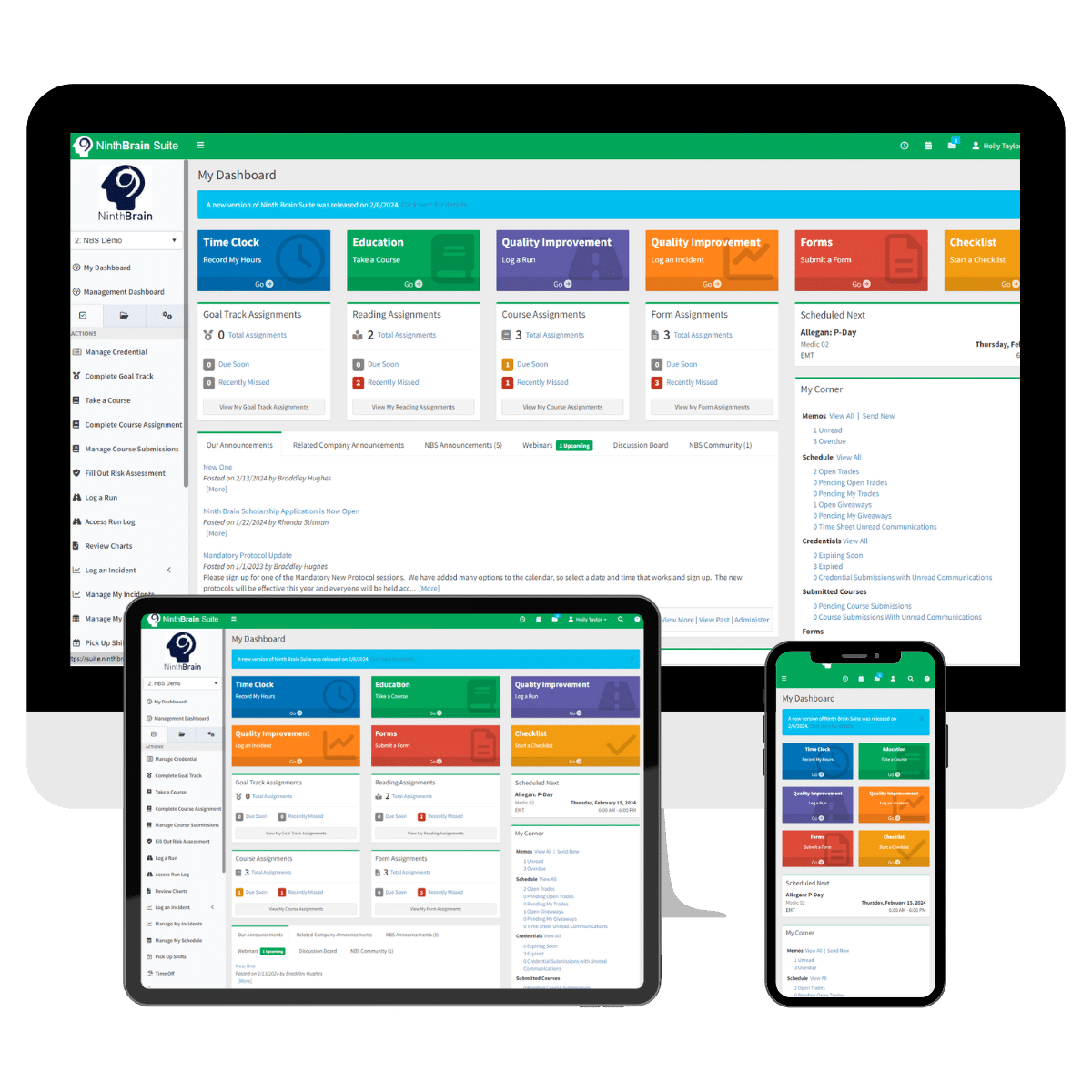
Ninth Brain offers an integrated, forward-looking solution that streamlines compliance across multiple areas of EMS operations. Its Incident Reporting system enables real-time reporting and analytics, providing a centralized platform for reviewing incidents, identifying trends, and taking corrective action, ensuring alignment with CAAS and CAMTS standards. Simultaneously, the platform automates the vehicle inspection process by attaching forms to shifts, supporting recurring inspections, and reducing manual workloads. This ensures that vehicles are consistently inspected and stocked, with detailed reporting available for high-level compliance checks or specific audits.
By centralizing all data, Ninth Brain allows EMS agencies to cross-reference information easily, such as connecting vehicle maintenance records to incident reports, improving operational efficiency and reducing risks. As the EMS industry continues to evolve, Ninth Brain remains committed to simplifying compliance and enhancing accountability for agencies everywhere.
Compliance Checklist Add-On: Is Your EMS Agency Ready for Full Compliance?
Use this checklist to assess your current compliance processes and identify areas for improvement:
Incident Tracking Compliance Checklist:
- Do you have a centralized system for reporting and tracking patient care incidents?
- Are incidents reviewed in real-time and addressed promptly?
- Are trends in patient care incidents regularly analyzed for corrective action?
- Does your incident reporting process align with CAAS 201.06 and 202.05?
- Does your incident reporting process align with CAMTS 03.05?
- Can you easily retrieve historical data on incident reports for audits?
Vehicle Inspection Compliance Checklist:
- Are vehicle inspection forms attached to shifts for regular inspections?
- Are vehicle inspections conducted and documented on time for every shift?
- Is there a recurring process for vehicle inspection forms to ensure regularity?
- Do your vehicle inspection reports meet CAAS 203.03.02 and CAMTS 03.06.08 requirements?
- Can administrators easily retrieve both current and previous versions of inspection forms with active dates?
- Are compliance gaps in vehicle inspections identified and addressed proactively?
If you’ve checked all the boxes, your EMS agency is well on its way to full compliance. If not, explore how Ninth Brain can help automate these processes and ensure no compliance detail is overlooked.
Click the button below to request a free demonstration of Ninth Brain today!

When urgent medical incidents occur, first responders are often quick to the scene to provide treatment, transport, and other emergency medical care services. Providing emergency medical services (EMS) represents one of the most essential roles a person can have in society.
Accidents can happen at any time, and EMS workers need to be prepared to respond in the best way possible. This preparation means a strict training and approval process for those interested in being first responders.
What Is the EMS Training Process?
EMS training involves completing coursework and an NREMT, EMT, or Paramedic exam. Training generally involves learning about important emergency care procedures such as life support, administering medicines, and basic surgery.
Active EMS professionals must demonstrate a basic skill level and competencies for the desired role. These may include:
- Problem-solving
- Communication
- Leadership
- Situational awareness
Safe transport and care of potential patients require the ability to make good decisions in stressful environments and have compassion for those in your care. Certification is required before even being considered for a real-world position in EMS.
How to Simplify the EMS Training Process
Every EMS training process involves supporting the professional development of potential caregivers. There are strict rules governing how individuals are expected to act in any situation — there are many moving parts within EMS, and seamless integration is essential for ensuring quality care for patients.
The primary role of EMS is to reinforce public health and safety. Those going through the EMS training process may face some difficulties dealing with the challenges head-on. Here are 5 tips for simplifying the EMS training process:
1. Reach Out to Peers
It’s harder to study in isolation. The most successful learners find groups of like-minded individuals to challenge one another and make the whole process more enjoyable. Working in groups allows you to give and receive feedback, challenge one another with questions, and offer support when things get difficult.
If you want to get through the EMS training process with ease, reach out to your peers to form partnerships for ongoing study. By discussing content with other students, you’ll be able to challenge your assumptions and develop stronger medical skills.
2. Find the Right Program
Many different EMS training programs will get you to where you want to go. Finding the program that works for you will ensure you’re headed in the right direction. Doing coursework that you like will allow you to enjoy the education process and eventually, your new career.
Make sure your curriculum of choice is up to the latest standards and gives you instruction in your chosen role. Some programs are more selective than others, so make sure you’re prepared for constant evaluations and personal criticism.
3. Be Ambitious
If you’re determined enough, there’s nothing that can stand in your way. The EMS training process will present many obstacles that might tempt you to give up on your career goals. This reality makes it important to always remember your reasons for taking part in the training process.
Don’t settle for learning the minimum. If you’re serious about being in EMS, you should constantly challenge yourself. This drive means going beyond simply keeping up with your coursework. Try to cultivate a deeper interest in the subject matter so you can get to know the EMS training process more intimately.
4. Stay Positive
It’s easy to become disillusioned, especially when training to become a medical worker. There will be setbacks and people who don’t think that you can make it to the end. Despite all of these factors working against you, staying positive and delivering your best performance is important.
With a positive mindset, you’ll be less likely to get burned out and become overwhelmed by negativity. Don’t be distracted by the setbacks. Keep your eye on your long-term goals. This focus will ensure you’ll be able to push through any challenges that come your way.
5. Become Safety-Oriented
Safety is a core component of EMS training programs. Shifting your perspective to put safety first will give you a better relationship with medical management procedures. By taking a safety-oriented approach to your everyday life, you’ll have a clear picture of the subject matter, allowing you to absorb it more easily.
Make safety a foundational part of who you are. Being conscious of safety, potential hazards, and the best prevention methods will ensure you have the right mindset when going through the EMS training process.
Training Better First Responders
EMS management is an essential part of medical care. In case of emergencies, the right people need to have access to the information they need to provide care. Proper EMS software provides a paperless system for dealing with important records and medical histories.
More people every day are discovering how EMS software can improve care with access to innovative platforms that allow you to track personnel, patients, and equipment with ease.
Records management is critical in the healthcare field. With EMS management software, first responders have access to the best training and operational data so they can help more people more effectively.
Wondering if Ninth Brain is the right fit? Let’s Connect and Explore!