If you’ve ever scrambled to fill a shift at the last minute—or worse, had to run short-staffed—you know how stressful and disruptive poor scheduling can be. In EMS, where every second counts, having the right people in the right place at the right time isn’t just a goal—it’s a necessity.
Unfortunately, many agencies still rely on manual scheduling methods that are time-consuming, error-prone, and hard on staff. But there’s a better way. Smart scheduling tools are helping EMS leaders streamline operations, reduce burnout, and improve both employee satisfaction and patient care.
The Link Between Schedule and Safety
Manual scheduling often leads to a cascade of problems: shifts go unfilled, overtime piles up, and staff morale takes a hit. It’s not just inconvenient—it’s risky.
According to the National Association of State EMS Officials (NASEMSO), fatigue is one of the most serious hidden dangers in EMS. Schedules that include back-to-back shifts, inconsistent hours, or last-minute changes can contribute directly to provider fatigue, which in turn affects performance and safety on the job [1]
When providers are stretched too thin or constantly adjusting to unpredictable schedules, it’s not just their well-being that suffers. Patient care can be compromised, and the agency’s overall efficiency takes a hit.
Shift Work and Provider Well-Being
EMS professionals are no strangers to long hours and overnight shifts. But when those shifts are the rule and not the exception, the effects can be long-lasting.
A report from the *Journal of Emergency Medical Services (JEMS)* highlights how irregular shift work can disrupt sleep patterns, increase stress, and lead to burnout [2]. Over time, this can result in higher turnover, more sick days, and a workforce that’s less engaged and less effective.
Smart scheduling helps mitigate these issues by giving providers more predictability and control over their schedules. When staff can set availability, swap shifts easily, and avoid excessive overtime, they’re more likely to stay healthy, focused, and satisfied with their work.
Smarter Scheduling, Stronger Systems
So what exactly is “smart scheduling”? It’s more than just putting names on a calendar. It’s about using technology to automate shift assignments, track availability, manage overtime limits, and ensure compliance with staffing policies.
The U.S. Department of Transportation’s Office of EMS emphasizes that optimized scheduling is key to improving workforce stability and operational readiness [3]. When agencies use data-driven tools to manage staffing, they can respond more effectively to changing demands and reduce the administrative burden on supervisors.
Even more importantly, smart scheduling supports safer care. A literature review in the Prehospital Emergency Care Journal found that fatigue-related errors in EMS are often linked to poor scheduling practices [4]. By using systems that account for rest periods, shift length, and workload balance, agencies can reduce the risk of fatigue-related incidents.
Final Thoughts
Scheduling might not be the flashiest part of EMS operations, but it’s one of the most critical. When it’s done right, everything runs smoother—crews are happier, patients are safer, and leaders can focus on strategy instead of scrambling to fill gaps.
If your agency is still relying on spreadsheets, sticky notes, or last-minute texts to manage shifts, it might be time to consider a smarter approach. With the right tools, you can turn scheduling from a daily headache into a strategic advantage.
References
- National Association of State EMS Officials. (2018). Fatigue in EMS: The hidden danger. https://nasemso.org/wp-content/uploads/Fatigue-in-EMS-The-Hidden-Danger.pdf
- Journal of Emergency Medical Services. (2016). The impact of shift work on EMS providers. https://www.jems.com/administration-and-leadership/the-impact-of-shift-work-on-ems-providers/
- S. Department of Transportation, National Highway Traffic Safety Administration, Office of EMS. (2020). Improving EMS workforce scheduling and deployment. https://www.es.gov/pdf/advancing-ems-systems/Workforce-Scheduling-Deployment.pdf
- Patterson, P. D., Higgins, J. S., Van Dongen, H. P. A., Buysse, D. J., Thackery, R. W., Kupas, D. F., & Weaver, M. D. (2017). Scheduling and fatigue in EMS: A review of the literature. Prehospital Emergency Care, 21(5), 561–571. https://doi.org/10.1080/10903127.2017.1347223
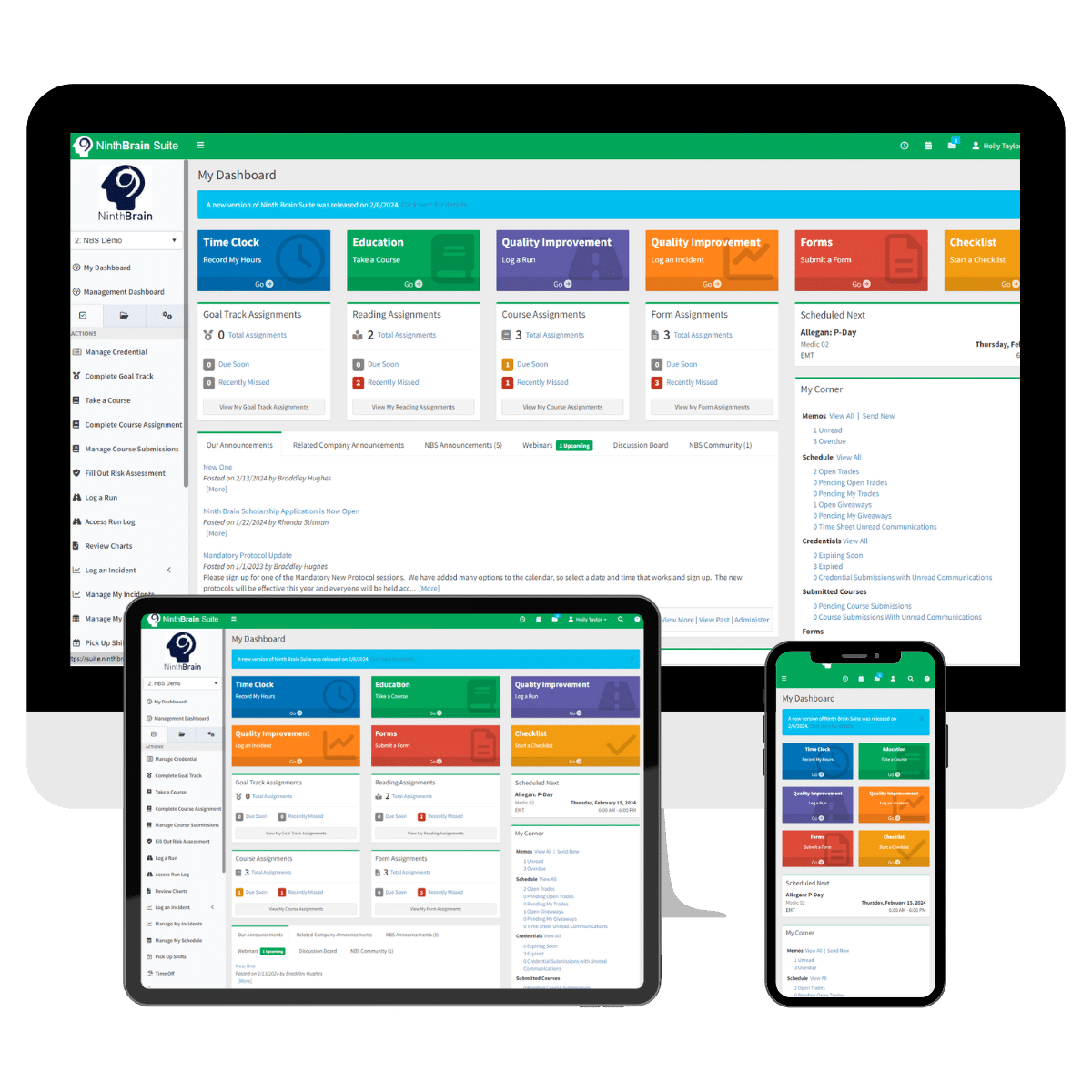
Efficient scheduling is essential for EMS coordination. Traditional methods like pen and paper or spreadsheets often lead to inefficiencies and errors. A dedicated EMS scheduling program like Ninth Brain can revolutionize your process, saving time and reducing mistakes. Here’s why you should make the switch.
Hidden Costs of Pen and Paper Scheduling
While pen and paper seem cost-effective, they come with hidden costs. Manually maintaining schedules is tedious and error-prone, nullifying any initial savings. As schedules grow complex, managing them on paper leads to administrative bottlenecks, diverting attention from critical tasks and increasing the risk of errors and miscommunication.
Limitations of Spreadsheets
Spreadsheets become unwieldy as your agency grows. Managing extensive data manually increases the risk of errors and outdated information, leading to scheduling conflicts and operational disruptions. Spreadsheets lack real-time updates, complicating staff and resource coordination.
Signs It’s Time to Upgrade
Frequent scheduling mistakes indicate your current method is failing. As your team grows, robust scheduling tools become necessary. Listening to your team’s feedback can highlight inefficiencies and underscore the need for an improved approach.
Benefits of Automation in EMS Scheduling
Automation reduces human error, ensuring accurate and reliable schedules. Automated systems handle routine tasks, freeing up staff to focus on critical responsibilities and enhancing overall productivity. Consistent, automated scheduling improves reliability by ensuring shifts are always covered.
Time-Saving Advantages of EMS Scheduling Software
EMS scheduling software reduces the time spent on scheduling tasks, freeing up administrative resources. Real-time updates enable quicker schedule adjustments, improving response times and keeping operations smooth. Automation allows staff to focus on more critical tasks, enhancing overall productivity.
Overcoming Common Barriers to Adoption
Implementing EMS scheduling software boosts efficiency, allowing administrative staff to focus on essential areas. Real-time updates and automation streamline operations, reducing manual tasks and enhancing productivity.
Future-Proofing Your EMS Operations
Adopting the latest tools ensures efficient and competitive operations. Investing in technology now leads to long-term savings and efficiencies. Scalable EMS scheduling software grows with your agency, accommodating increased demand and complexity.
Why Choose Ninth Brain for Your EMS Scheduling Needs
Ninth Brain offers tailored features for EMS agencies, addressing unique scheduling challenges. A dedicated support team ensures a smooth transition, with extensive training to enhance user proficiency and confidence.
Conclusion
Switching from traditional scheduling methods to a dedicated EMS scheduling program improves efficiency, reduces errors, and saves time. Ninth Brain’s software offers tailored solutions, expert support, and comprehensive training, making it an ideal choice for EMS agencies looking to upgrade their scheduling processes.
FAQs
How does Ninth Brain’s EMS scheduling program save time?
Ninth Brain’s EMS scheduling program automates the scheduling process, reducing manual input and administrative tasks, thus saving time.
What are the risks of continuing with pen-and-paper methods?
Pen and paper methods are prone to errors, time-consuming, and can lead to miscommunication and scheduling conflicts.
How do spreadsheets compare to Ninth Brain’s scheduling software?
Spreadsheets lack real-time updates and are prone to human error, whereas Ninth Brain’s software provides automation, real-time updates, and error reduction.
What are the key features of Ninth Brain’s EMS scheduling program?
Key features includes work status rules, credential checks, request management (open shifts, trades, time off), shift notifications, time clock option, real-time updates and comprehensive reporting tools.
How can Ninth Brain’s software improve staff satisfaction?
Staff can focus on more critical tasks by reducing scheduling errors and administrative workload, increasing job satisfaction.
What are the initial steps for transitioning to Ninth Brain’s scheduling software?
The initial steps include assessing current scheduling needs, planning implementation, and providing staff training to ensure a smooth transition.
In the high-stakes world of Emergency Medical Services (EMS), the scheduling of shifts is more than just a logistical necessity—it’s a critical component that affects provider well-being, patient safety, and overall organizational efficiency. With various shift patterns, from grueling 24-hour shifts to more manageable 12-hour rotations, EMS agencies and providers constantly seek the ideal balance that promotes optimal care delivery and employee satisfaction. This article delves into the intricacies of EMS shift patterns, exploring the preferences of providers and organizations while highlighting the pivotal role of advanced scheduling solutions like Ninth Brain’s robust Schedule Builder.
Understanding EMS Shift Patterns
EMS shift patterns have evolved significantly, reflecting changes in medical practices, technological advancements, and a deeper understanding of human physiology. Commonly observed patterns include:
- 24-Hour Shifts: Traditionally favored for efficiency and predictability.
- 12-Hour Shifts: Offering a balance between work demands and personal time, 12-hour shifts are increasingly popular among providers seeking a more balanced lifestyle.
- Rotating Shifts: A mix of day and night shifts aims to distribute the workload evenly but is often criticized for disrupting natural sleep cycles.
Each pattern has its merits and drawbacks, influencing the immediate work environment and the broader aspects of provider health and organizational goals.
The Impact of Shift Patterns on EMS Providers
Shift patterns exert a profound influence on EMS providers, affecting aspects such as:
- Worker Morale: Extended or irregular shifts can lead to burnout, stress, and decreased job satisfaction, whereas predictable, shorter shifts tend to boost morale and engagement.
- Worker Retention: Favorable shift patterns are a significant factor in retaining skilled providers, with many preferring schedules that accommodate work-life balance.
The Influence of Shift Patterns on Patient Safety
The correlation between shift patterns and patient safety cannot be overstated. Exhaustion from long or irregular shifts can impair decision-making and physical coordination, directly impacting the quality of patient care. Conversely, well-rested providers are more alert, responsive, and capable of delivering high-quality medical services.
Organizational Preferences for Shift Patterns
EMS agencies opt for specific shift patterns based on several factors:
- Efficiency and Coverage: Ensuring service demand is met without overburdening resources.
- Agency Goals and Productivity: Aligning work schedules with organizational objectives, including cost management and service quality.
Provider Preferences for Shift Patterns
Providers often have personal preferences for their shifts, influenced by family commitments, personal health, and lifestyle choices. Many desire schedules that offer a predictable routine, allowing them to plan their lives outside of work.
The Role of Scheduling Software in Managing Shift Patterns
Advanced scheduling solutions, like Ninth Brain’s robust Schedule Builder, play a crucial role in addressing the complex needs of EMS scheduling. These tools offer:
- Flexibility: Allowing for accommodating provider preferences within the constraints of organizational needs.
- Efficiency: Streamlining the scheduling process, reducing administrative burden, and ensuring optimal workforce utilization.
By leveraging technology, EMS agencies can balance operational demands and provider well-being harmoniously.
Challenges and Solutions in Shift Scheduling
Despite the best efforts, challenges persist in shift scheduling, including resistance to change, budget constraints, and the complexities of matching provider availability with service demands. Solutions lie in open communication, flexible policymaking, and the strategic use of scheduling technologies that offer adaptability and scalability.
Conclusion
Finding the best shift pattern for EMS agencies and providers is a multifaceted challenge that requires carefully balancing individual preferences, patient care standards, and organizational goals. With the support of innovative scheduling solutions like Ninth Brain’s Schedule Builder, EMS agencies can navigate these complexities, enhancing both provider well-being and service delivery excellence. As the EMS landscape evolves, so will the strategies for optimal shift management, always with the twin goals of exceptional patient care and provider satisfaction in mind.
References:
https://www.ncbi.nlm.nih.gov/pmc/articles/PMC9060748/
https://www.ncbi.nlm.nih.gov/pmc/articles/PMC1854972/
FAQs
How do shift patterns affect EMS provider health and morale?
Shift patterns significantly influence EMS provider health and morale. Optimal shift patterns can offer improved job satisfaction, a better work-life balance, and reduced stress levels, enhancing overall well-being. Conversely, prolonged or irregular shifts can contribute to fatigue, burnout, and mental health issues, negatively impacting morale and physical health.
Why do EMS agencies prefer specific shift patterns?
EMS agencies prefer specific shift patterns based on several criteria, including operational efficiency, coverage needs, provider well-being, and budget constraints. The goal is to ensure continuous, high-quality patient care while managing resources effectively and supporting the health and satisfaction of their workforce.
How can EMS providers voice their preferences for shift patterns?
EMS providers can voice their preferences through open communication channels with management, participation in scheduling committees, and feedback mechanisms like surveys. Engaging in constructive dialogue about shift preferences and concerns can lead to more collaborative scheduling solutions that consider provider needs and organizational goals.
Can shift patterns impact patient safety in EMS?
Shift patterns can directly impact patient safety. Well-designed shift schedules that prevent provider fatigue and ensure adequate rest can enhance alertness and decision-making, leading to safer and more effective patient care. Conversely, overly long or irregular shifts can increase the risk of errors and accidents, compromising patient safety.
How does Ninth Brain help in scheduling EMS shifts?
Ninth Brain’s Schedule Builder offers a comprehensive solution for EMS shift scheduling challenges. It enables agencies to create flexible, efficient schedules that accommodate provider preferences, meet operational demands, and ensure optimal coverage. With features like easy shift swaps, real-time updates, and compliance tracking, Ninth Brain simplifies the scheduling process, making it easier to balance provider well-being and organizational needs.
What are some common shift patterns in EMS today?
Common shift patterns in EMS include 24-hour shifts, which allow for extended coverage with fewer handoffs; 12-hour shifts, which offer a balance between work demands and rest; and rotating shifts, which include day and night work. Agencies may also employ variations of these patterns or hybrid schedules to meet their specific needs and goals best.
Wondering if Ninth Brain is the right fit? Let’s Connect and Explore!