The Importance of End-to-End Compliance in EMS
In the fast-paced world of emergency medical services (EMS), the smallest oversight can lead to significant consequences. Imagine a vehicle breaks down in the middle of a transport, jeopardizing patient care and safety. Later, it is discovered that a required inspection hadn’t been completed. In another scenario, an EMS agency was sued after failing to document and address multiple patient care incidents; incidents that could have been avoided if patterns of issues were caught earlier.
These real-world scenarios highlight how crucial it is to have centralized systems in place — not just for tracking patient care incidents but also for ensuring vehicles are regularly inspected. By integrating these systems, EMS agencies can avoid costly oversights while improving operational efficiency, patient safety, and regulatory compliance.
The Role of Incident Tracking in EMS Compliance
Why Incident Reporting Matters
Properly reporting, tracking, and analyzing patient care incidents is not just good practice — it’s a legal and operational necessity. Without a system in place, EMS agencies risk missing critical trends in patient care that could lead to worse outcomes over time. One agency found this out the hard way when they were sued after failing to document and address multiple patient care incidents. This wasn’t just a costly legal battle; it was a failure to ensure patient safety.
Key Compliance Standards
Incident reporting isn’t just about avoiding lawsuits; it’s required by national standards. Organizations like the Commission on Accreditation of Ambulance Services (CAAS) and the Commission on Accreditation of Medical Transport Systems (CAMTS) set clear requirements for documenting and tracking incidents. For example, CAAS 201.06 and 202.05, as well as CAMTS 03.05, mandate a robust system for incident tracking.
Vehicle Inspections: A Vital Component of EMS Safety and Compliance
The Risk of Skipping Inspections
Remember that vehicle that suddenly broke down while transporting a critically ill patient? The investigation that followed revealed that a required inspection hadn’t been completed. The delay caused by this breakdown not only put the patient’s life at risk but also led to a formal state investigation into the agency’s practices. These incidents are rare, but most are avoidable if regular vehicle inspections are conducted.
Key Compliance Standards for Vehicle Safety
Vehicle safety is as critical as patient care. CAAS 203.03.02 requires that all equipment be checked regularly, and CAMTS 03.06.08 outlines the documentation requirements for vehicle inspections. These standards ensure that EMS vehicles are ready to respond and equipped to handle any emergency.
How Centralized Systems Bridge the Gap Between Incident Tracking and Vehicle Inspections
Operational Efficiency Through Integration
Having separate systems for incident tracking and vehicle inspections can be inefficient and error prone. By integrating both processes into a centralized system, EMS agencies can streamline their operations, reduce paperwork, and minimize human error. A unified platform eliminates the need to toggle between systems, saving time and improving data accuracy.
Improving Patient Safety and Reducing Risk
Both incident tracking and vehicle inspections play a key role in improving patient safety. A well-maintained vehicle and a well-documented incident history provide a solid foundation for delivering high-quality care.
The Future of EMS Compliance: Automating Processes and Improving Accountability
The Evolution of EMS Compliance Tools
Automation is transforming how EMS agencies manage compliance. As new standards emerge and expectations grow, tools like Ninth Brain will continue to play a vital role in reducing administrative workloads and improving compliance efforts. Automating both incident tracking and vehicle inspections allows EMS teams to focus on what matters most — delivering exceptional patient care.
Conclusion: Ensuring Comprehensive EMS Compliance
End-to-end compliance requires more than just checking off boxes — it requires a unified, proactive approach. With a centralized system for incident reporting and vehicle inspections, EMS agencies can avoid costly oversights, improve operational efficiency, and ensure patient safety.
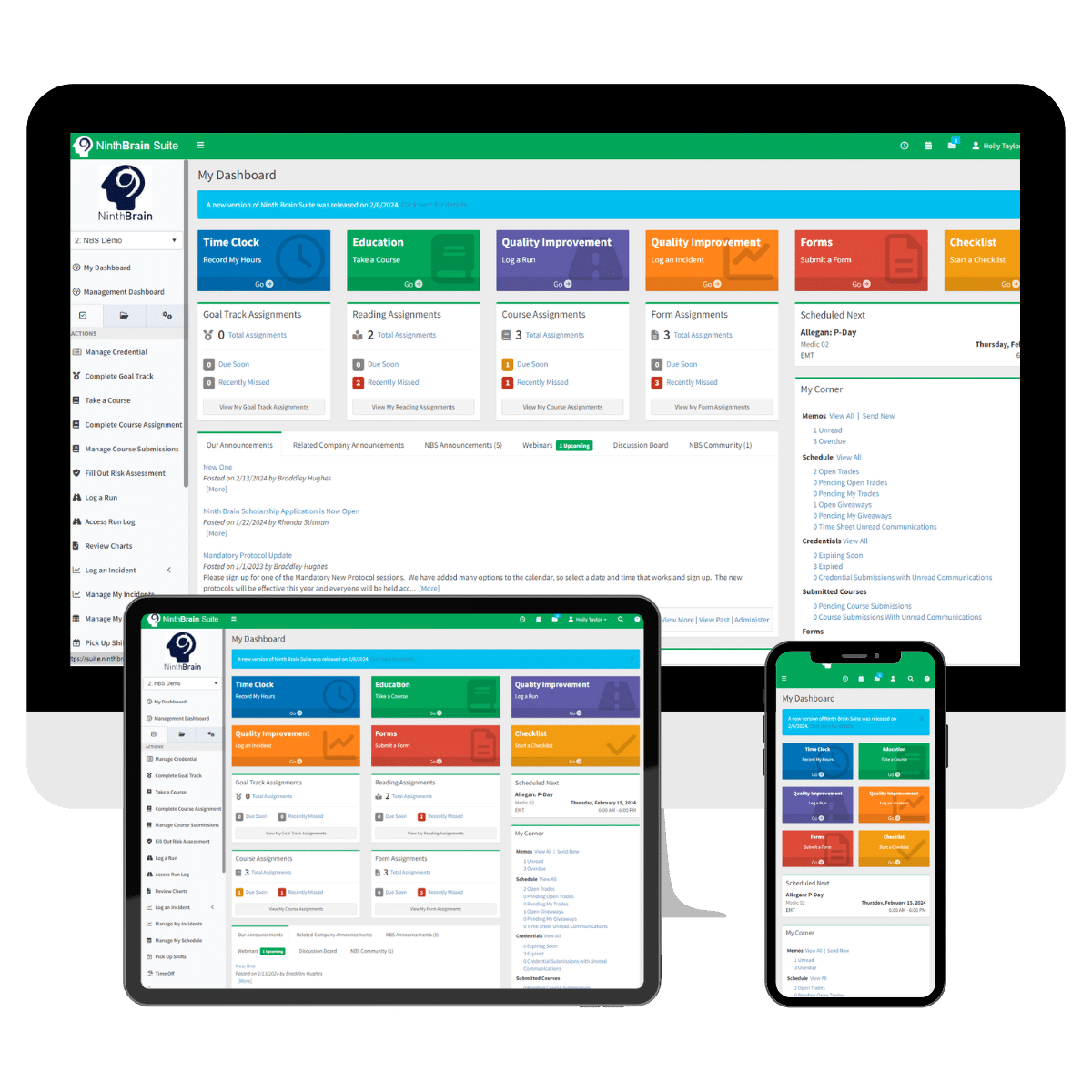
Ninth Brain offers an integrated, forward-looking solution that streamlines compliance across multiple areas of EMS operations. Its Incident Reporting system enables real-time reporting and analytics, providing a centralized platform for reviewing incidents, identifying trends, and taking corrective action, ensuring alignment with CAAS and CAMTS standards. Simultaneously, the platform automates the vehicle inspection process by attaching forms to shifts, supporting recurring inspections, and reducing manual workloads. This ensures that vehicles are consistently inspected and stocked, with detailed reporting available for high-level compliance checks or specific audits.
By centralizing all data, Ninth Brain allows EMS agencies to cross-reference information easily, such as connecting vehicle maintenance records to incident reports, improving operational efficiency and reducing risks. As the EMS industry continues to evolve, Ninth Brain remains committed to simplifying compliance and enhancing accountability for agencies everywhere.
Compliance Checklist Add-On: Is Your EMS Agency Ready for Full Compliance?
Use this checklist to assess your current compliance processes and identify areas for improvement:
Incident Tracking Compliance Checklist:
- Do you have a centralized system for reporting and tracking patient care incidents?
- Are incidents reviewed in real-time and addressed promptly?
- Are trends in patient care incidents regularly analyzed for corrective action?
- Does your incident reporting process align with CAAS 201.06 and 202.05?
- Does your incident reporting process align with CAMTS 03.05?
- Can you easily retrieve historical data on incident reports for audits?
Vehicle Inspection Compliance Checklist:
- Are vehicle inspection forms attached to shifts for regular inspections?
- Are vehicle inspections conducted and documented on time for every shift?
- Is there a recurring process for vehicle inspection forms to ensure regularity?
- Do your vehicle inspection reports meet CAAS 203.03.02 and CAMTS 03.06.08 requirements?
- Can administrators easily retrieve both current and previous versions of inspection forms with active dates?
- Are compliance gaps in vehicle inspections identified and addressed proactively?
If you’ve checked all the boxes, your EMS agency is well on its way to full compliance. If not, explore how Ninth Brain can help automate these processes and ensure no compliance detail is overlooked.
Click the button below to request a free demonstration of Ninth Brain today!

Emergency patient care is an essential service that requires organization, planning, and real-time response to unique problems. For many healthcare organizations, EMS is the bedrock of service, allowing them to provide medical care for victims of accidents, disasters, and other emergencies.
While most medical providers have some plan or guidelines in place for dealing with emergencies, not all have the same capabilities.
With the right tools in place, emergency medical providers can ensure they have the support they need to provide care during an incident. Emergency care providers turn to EMS for practical advice on their day-to-day workflows.
What Is EMS?
Emergency medical services (EMS) refers to the care that providers offer to victims during emergency incidents. EMS is an essential part of patient care and allows first responders to deliver on-the-scene medical attention to those who need it while tracking events on the ground in real time.
EMS systems can refer to a variety of important services that provide:
- Continued communications
- Essential transportation
- Victim rehabilitation
- Disaster prevention
- Incident response
These are only a few of the roles that EMS workers take on. By focusing on the needs of the communities they serve, EMS organizations can effectively mitigate health hazards through preparedness and disaster training.
Why Is EMS Important?
Proper EMS reaction is an essential part of emergency response. Medical personnel and other first responders are a lifeline for people caught in dangerous situations. Having access to life-saving care before it’s too late can dramatically improve the likelihood of recovery during an event.
EMS combines healthcare, public safety, and public health to provide communities with valuable medical services, allowing them to identify and deal with health-related problems and emergencies to improve their quality of life. Modern EMS is essential for responding to events with precision and purpose.
What Is EMS software?
Proper EMS has many moving parts, making decision-making harder and limiting the impact of response efforts. EMS workers need a tool that they can use to allocate resources and personnel where they’re needed without adding unwanted overhead to their roles.
Modern EMS software provides a platform for users to easily deploy their emergency response efforts, saving them time and money in the long run.
EMS software can be used to track and manage user data, generate reports, and ensure the quality of service. Most EMS software can be integrated into existing solutions to ease learning and ensure public safety requirements are met.
What Are Some Examples of EMS Software?
There are many types of EMS software available for users to choose from. By considering what options are right for you, you’ll be able to mitigate many of the complexities of emergency response while managing teams and providing vital care services.
With EMS software in place, you can access powerful and modular features that allow you to design the response plan that fits your community’s needs. First responders can use EMS software to improve their incident response and increase public safety for everybody.
What Features Do EMS Software Provide?
EMS software offers many powerful features that users can leverage to improve their delivery of care models while eliminating waste and cost overruns. Intelligent tracking and analysis capabilities and real-time communications capabilities make EMS software essential to any emergency response team’s efforts.
Here are just a few of the things that you can do with an EMS software solution in place:
- Scheduling
- Timekeeping
- Certification tracking
- Real-time alert management
- Automated billing
EMS software is designed to aid in computer-related tasks and offer a robust and secure model for responders to abide by when making decisions.
The challenges of healthcare mean that emergency responders need all the support they can get when working in the field. This requirement makes it essential for them to have access to modern tools and services they can rely on in any situation.
More Medical Providers Are Turning to EMS Software
EMS software is growing in popularity due to its ease of use and the improved efficiencies it generates. These benefits mean that more emergency responders will continue to adopt EMS software moving forward.
With advanced capabilities for information management, resource distribution, and asset tracking, there’s no need that EMS software can’t fill. In the modern world of IT, EMS software is the answer that emergency responders need.
Emergency calls can take any number of forms. When life-threatening events occur, responders need to be ready to take action. EMS software can make all the difference when lives are on the line. Modern EMS workers turn to EMS software for better emergency management and incident reporting.
EMS software designed by experienced professionals who understand first responders’ needs can eliminate many obstacles that prevent quality care for those in critical situations. When it comes to maximizing care provision, EMS software is the go-to solution for medical providers who need immediate results.
Incident management requires the use of emergency personnel and systems for real-time responses to critical situations.
The use of best practices is essential in emergency management. Having the tools and equipment to deal with unexpected events allows responders to save lives and deliver care when it’s needed. By using emergency medical services (EMS) software, first responders can manage all of the intricacies of their role.
What Is EMS Software?
EMS software is used by first responders to track important assets and ensure they’re providing the best care possible to victims when incidents occur. By taking advantage of modern computing capabilities, EMS software services make it easier for medical providers to manage daily tasks and reinforce best practices.
Deployments featuring EMS software can involve the use of a single application or a collection of applications curated to meet the demands of delivering critical care during emergency incidents. By connecting people with the right technologies, EMS software makes emergency management more practical and less complex.
Understanding the components of EMS software ensures you can take full advantage of the many features you can gain by using it in the field.
What Is EMS Software Used for?
EMS software is a powerful solution for emergency providers who want to simplify the management of their core services. The right EMS software allows medical personnel to collect field data, manage patients, and access documentation.
Modern EMS software is often used for:
- Billing
- Time management
- Accessing and updating patient records
- Equipment maintenance tracking
EMS software offers a variety of optimizations that first responders can use to take control of their workflows.
By bringing together information and technology, EMS software gives ambulance drivers, fire departments, and other first responders the ability to address their shortcomings by filling gaps in their training, communication, and support capabilities.
This flexibility makes EMS software a valuable solution for professionals working in all areas of emergency response.
5 Common Myths About EMS Software
As EMS software has become more popular, assumptions about its strengths have impeded good decision-making. While EMS software isn’t a magic solution that will immediately fix all of your problems, it provides some important advantages.
Users should be aware of many common myths about EMS software before deciding which is right for them:
Myth 1 — EMS Software Is Non-Compliant
Tracking and reporting on internal operations is an essential part of healthcare management. Many decision-makers don’t trust a software solution to generate reports, do audits, and ensure liabilities are addressed.
However, EMS software can be — and is — used by organizations throughout the industry to ensure HIPAA compliance and stay on top of regulations.
Myth 2 — EMS Software Is Hard to Use
Some emergency medical providers might be concerned that EMS software will only reduce response times because users have to get to know a whole new system.
However, modern EMS tools are simple to use and can improve the delivery of medical care by removing many barriers involved in collecting and communicating important emergency data.
Myth 3 — There’s No Need for Dedicated EMS Software
Many organizations avoid using any consolidating EMS software because they fear using a single repository for all their important information. This sole source could be a potential issue if the data were lost.
Modern EMS software provides real-time data storage, backup, and recovery capabilities that allow medical service providers to retain and process information. This automated retention allows for quality improvement audits and other historical documentation analyses to be carried out in a single, secure location.
Myth 4 — EMS Software Can’t be Integrated with Existing Systems
Most existing emergency response providers already have systems in place for dealing with their day-to-day tasks. Adding new solutions to existing infrastructure can make it difficult to maintain continuity of care.
EMS software easily integrates with exciting solutions, meaning their deployment won’t impact operations. With EMS, managers can mitigate failures and improve efficiencies by leveraging automated tools and services.
Myth 5 — Smaller Businesses Shouldn’t Use EMS Software
Many smaller businesses might assume that EMS software isn’t for them. Larger companies aren’t the only ones that can benefit from using EMS in the field. Smaller businesses can use streamlined communication channels, real-time support, and an actively maintained software ecosystem.
This setup eliminates overhead and makes it easier to provide care without failing to address important healthcare data.
Providing Better Care with EMS Software
Proper EMS software is an important tool that any modern company can take advantage of to improve care delivery. EMS software eases workloads and ensures the integrity of data. This approach is essential for medical providers who want to offer the best care to their patients.
Emergency care is complicated, and there are always new and unique incidents that need to be addressed.
Communicating emergencies, coordinating resources, and managing reports are all tasks that require a comprehensive solution. One that professionals can use to ease their workloads and eliminate waste. With EMS software, emergency personnel can meet these challenges head-on and continue their mission of saving lives.
Wondering if Ninth Brain is the right fit? Let’s Connect and Explore!