How Emergency Medical Software Enhances Patient Care Through Better Workforce Management
Patient care in the emergency medical services (EMS) industry doesn’t begin and end at the scene of an incident. It starts long before a call comes in, with how agencies train their crews, schedule their shifts, track their credentials, and manage operations. When the administrative side of an EMS organization runs smoothly, frontline providers are better prepared, more focused, and more effective at delivering life-saving care.
Emergency medical software bridges the gap between operational efficiency and clinical excellence. By equipping agencies with powerful tools to manage their workforce, these platforms create conditions that enable paramedics, EMTs, and other first responders to perform at their best when it matters most. Here is a closer look at how smarter workforce management translates into better patient outcomes.
The Connection Between Workforce Management and Patient Outcomes
It’s easy to think of workforce management and patient care as separate concerns, but in EMS, they are deeply interconnected. An agency that struggles to fill shifts is more likely to send fatigued providers into the field. An organization that cannot track credential expirations risks deploying personnel who are not current on essential certifications. These operational gaps do not just create administrative headaches; they directly put patients at risk.
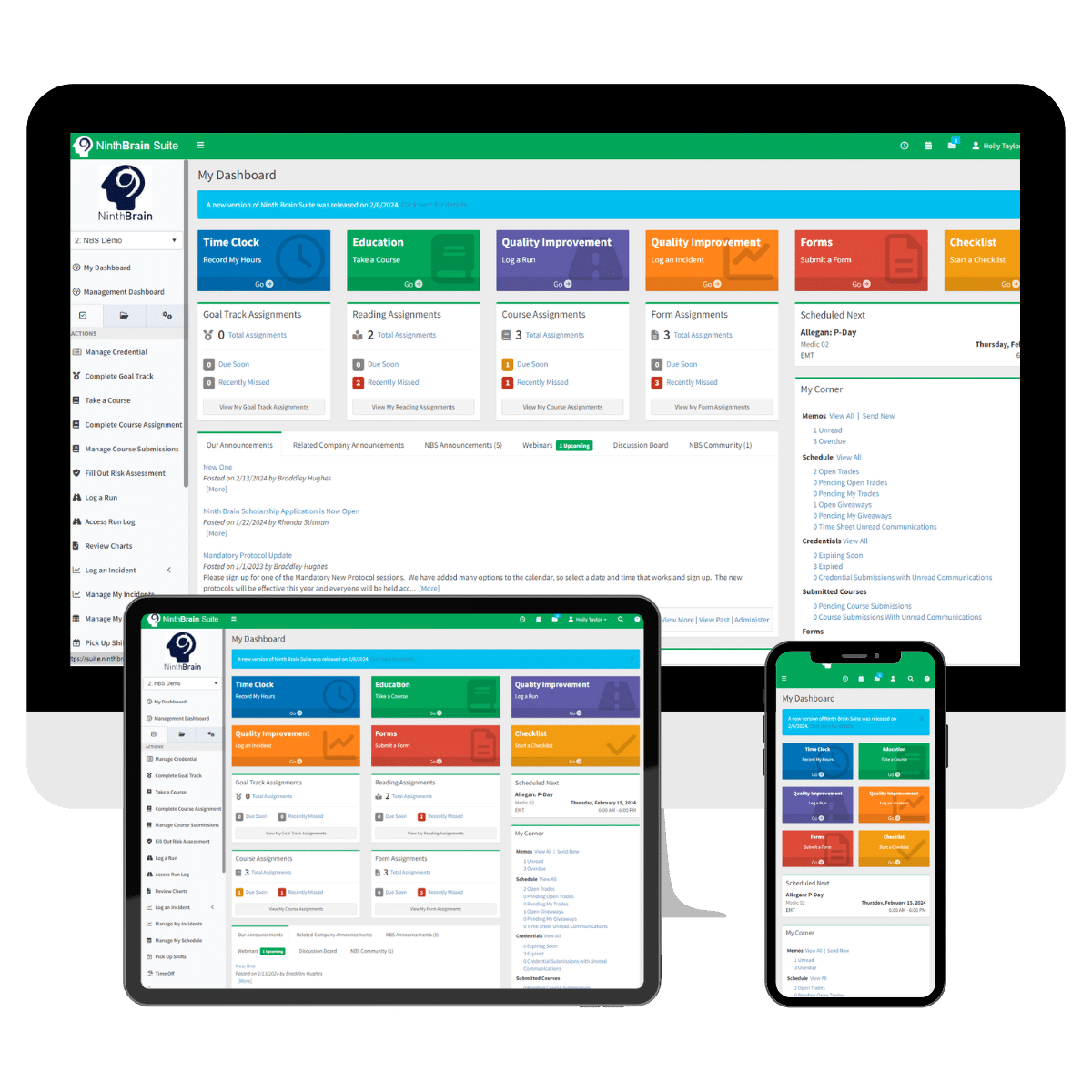
Emergency medical software reduces these vulnerabilities by centralizing workforce data and automating the processes that keep agencies compliant, staffed, and prepared. When supervisors have full visibility into their team’s readiness, they can make confident decisions that protect both crews and communities. A comprehensive EMS management platform transforms this visibility into lasting operational strength and resilience.
Smarter Scheduling Keeps the Right Providers on the Road
Staffing is one of the most consequential decisions an EMS agency makes every day. Understaffed shifts lead to slower response times, provider burnout, and compromised care. Overstaffed shifts waste budgets that could be directed toward training or equipment.
A purpose-built EMS workforce scheduling system takes the guesswork out of this process. When a crew member calls out, supervisors can quickly identify qualified replacements without having to scramble through phone trees or spreadsheets. The result is consistent coverage that ensures every vehicle is staffed with credentialed providers ready to deliver high-quality care.
Credential Tracking Ensures Every Provider Is Qualified and Current
In a field where certifications and licenses are mandatory, letting a renewal slip through the cracks is not a minor oversight; it is a compliance violation and a patient safety concern. Emergency medical software with integrated credential management capabilities tracks every certification, license, and continuing education requirement for every employee in your organization.
Automated notifications can alert both the employee and their supervisor well before the expiration date. More importantly, the best platforms tie credential data directly to the scheduling engine. This safeguard helps ensure that every provider on scene has the qualifications needed to deliver appropriate care.
Continuous Education Builds a More Competent Workforce
The protocols, medications, and techniques used in emergency medicine are constantly evolving. Agencies that invest in ongoing education give their teams the knowledge and confidence to handle any scenario. But managing training programs manually, tracking who completed what, when their next requirement is due, and whether they passed, is a complex challenge as teams grow and requirements change, impacting both new hires and experienced personnel alike.
An integrated EMS learning management system simplifies every aspect of crew education. Agencies can build custom courses, assign required training, deliver content online so providers can learn on their own schedule, and automatically record completion to each employee’s profile. Access to a robust library of educational courses ensures teams always have fresh, accredited material at their fingertips. When providers are well-trained, they make better clinical decisions, and patients benefit directly.
Quality Improvement Programs Close the Loop on Patient Care
Delivering excellent patient care is not a one-time achievement; it requires ongoing evaluation and refinement. Emergency medical software that includes quality improvement tools allows agencies to systematically log incidents, track patterns, and investigate root causes. Whether the issue is a medication error, an equipment malfunction, or a communication breakdown, a structured review process ensures problems are addressed before they recur.
Risk assessment features take this further by enabling agencies to create dynamic evaluation forms, set threshold-based alerts, and connect assessment data to operational records. When combined with real-time reporting tools, leadership gains a comprehensive view of organizational performance, turning raw data into meaningful improvements in patient care.
Streamlined Documentation Reduces Administrative Burden
Every minute a supervisor spends chasing down paperwork is a minute not spent on crew development or patient care oversight. Emergency medical software replaces paper-based workflows with digital tools that save time, reduce errors, and create an auditable trail of agency operations.
Custom forms and checklists allow agencies to digitize vehicle inspections, peer reviews, flight debriefs, and any other documentation requirements. A secure virtual resource center keeps policies, protocols, and critical documents accessible to every team member at any hour. When documentation flows seamlessly, agencies can direct their energy toward the people they serve.
What to Look for in an Emergency Medical Software Platform
Selecting the right platform is a decision that will shape your agency’s operations for years to come. The most impactful solutions offer an integrated suite of scheduling, credentialing, education, quality improvement, reporting, and documentation within a single, HIPAA-compliant environment. Agencies should also prioritize responsive customer support, mobile accessibility, and the flexibility to customize features to match their workflows.
A comprehensive EMS software platform eliminates the need for multiple disconnected systems and gives every level of your organization a shared source of truth. For agencies pursuing professional accreditation, a dedicated accreditation management system can further simplify the journey toward CAAS or CAMTS recognition.
Frequently Asked Questions
How does emergency medical software improve patient care?
Emergency medical software improves patient care by ensuring agencies always have qualified, well-trained providers on every shift. Through automated credential tracking, integrated education tools, and intelligent scheduling, these platforms eliminate operational gaps that can compromise the quality of care delivered in the field.
What role does workforce scheduling play in patient outcomes?
Effective workforce scheduling ensures every shift is staffed with providers who hold current certifications and the right skill sets. This prevents coverage gaps, reduces provider fatigue, and assures that patients receive care from qualified professionals.
Can EMS software help agencies maintain accreditation?
Yes. Some emergency medical software platforms include features designed to support CAAS and CAMTS accreditation, such as credential management, documented training records, quality improvement tracking, and customizable compliance reporting.
How does a learning management system benefit EMS providers?
An LMS allows EMS providers to access required training and continuing education courses online, complete them on their own schedule, and have progress automatically recorded. This keeps crews up to date on the latest protocols, which translate directly into more competent patient care.
Is emergency medical software secure enough for patient-related data?
Reputable EMS platforms are built to meet HIPAA compliance standards, using encryption, role-based access controls, and secure cloud infrastructure to protect sensitive data. When evaluating a platform, always confirm that it meets data security requirements for healthcare organizations.